Amana Refrigerator Instruction Manual: A Comprehensive Guide
Welcome! This manual provides essential guidance for your Amana refrigerator‚ assisting you in locating model and serial numbers for quick support access.
Finding your refrigerator’s model number‚ typically inside on the wall‚ streamlines searches and ensures accurate information retrieval for optimal performance and longevity.
Amana refrigerators are designed with a commitment to reliability and innovation‚ offering a range of models to suit diverse household needs. This instruction manual serves as a comprehensive resource‚ guiding you through the setup‚ operation‚ and maintenance of your new appliance. Understanding your refrigerator’s features and functions will maximize its efficiency and extend its lifespan.
Before beginning‚ it’s crucial to locate both the model and serial number. The model number‚ usually found inside the refrigerator on the wall‚ is essential for accessing specific support resources and replacement parts. The serial number‚ typically located on the back or bottom of the appliance‚ provides valuable information regarding the manufacturing date and specifications. Having these numbers readily available will expedite any service requests or inquiries you may have.
This manual will detail everything from initial setup and control panel operation to cleaning procedures and troubleshooting common issues‚ ensuring a seamless and satisfying ownership experience with your Amana refrigerator.
Understanding Your Refrigerator Model
Identifying your Amana refrigerator model is the first step towards accessing tailored support and maximizing its performance. The model number acts as a unique identifier‚ unlocking access to specific documentation‚ parts lists‚ and troubleshooting guides. This number is typically affixed to a plate located inside the refrigerator compartment‚ directly on the interior wall.
Alongside the model number‚ the serial number provides crucial manufacturing information. Often found on the appliance’s rear or underside‚ it helps determine the production date and specific features included with your unit. Knowing both numbers allows Amana customer service to provide precise assistance‚ ensuring efficient resolution of any concerns you may encounter.
Referencing these numbers when contacting support or ordering replacement parts guarantees compatibility and avoids potential delays. Keep this information readily accessible for future reference throughout the lifespan of your Amana refrigerator.
2.1 Locating the Model Number
Finding your Amana refrigerator’s model number is a straightforward process. Begin by opening the refrigerator door and carefully inspecting the interior walls. The model number is prominently displayed on a label‚ typically affixed to the right-hand wall within the main refrigerator compartment. This label is usually a silver or white sticker‚ clearly outlining key product information.
Look for a string of alphanumeric characters – a combination of letters and numbers – designated as the “Model Number.” It’s often positioned near the serial number‚ though their arrangement may vary slightly. Ensure adequate lighting to easily read the label.
Record this number accurately‚ as it’s essential for accessing specific support resources‚ warranty information‚ and replacement parts. Having the model number readily available will significantly expedite any service requests or inquiries you may have.
2.2 Understanding the Serial Number
Your Amana refrigerator’s serial number is a unique identifier crucial for tracking manufacturing details and warranty coverage. Located alongside the model number‚ typically on the interior wall of the refrigerator compartment‚ the serial number is also presented as a string of alphanumeric characters. It’s often a longer sequence than the model number itself.
The serial number provides valuable information regarding the refrigerator’s production date and specific build characteristics. Amana service technicians utilize this number to pinpoint exact component specifications and ensure compatibility during repairs.
Keep a record of your refrigerator’s serial number alongside the model number for future reference. This information is vital when contacting customer support or scheduling service appointments‚ enabling efficient assistance and accurate part identification.
Initial Setup and Installation
Proper setup is key to ensuring optimal performance and longevity of your new Amana refrigerator. Begin by carefully unpacking the appliance‚ inspecting it thoroughly for any shipping damage. Report any visible damage immediately to the retailer. Before positioning the refrigerator‚ select a location with adequate ventilation‚ away from direct sunlight and heat sources.
Next‚ carefully level the refrigerator using the adjustable feet. An uneven refrigerator can cause operational issues and excessive noise. Once leveled‚ connect the refrigerator to a dedicated‚ grounded electrical outlet.
Allow the refrigerator to stand upright for at least four hours before powering it on‚ enabling the refrigerant to settle. This prevents potential compressor damage. Refer to the following sections for detailed instructions on leveling and power connection.
3.1 Unpacking and Inspection
Carefully unpack your new Amana refrigerator‚ taking care not to damage the finish. Retain the packaging materials until you’ve confirmed the appliance is functioning correctly. Begin by removing all tape and protective film‚ both inside and outside the unit. Inspect the refrigerator thoroughly for any signs of shipping damage‚ such as dents‚ scratches‚ or broken components.
Check all accessories‚ including shelves‚ bins‚ and the ice maker components‚ to ensure they are present and undamaged. If any damage is discovered‚ immediately contact the retailer or Amana customer support. Document any damage with photographs for claim purposes.
Verify that all shipping materials have been removed from inside the refrigerator compartment.
3.2 Leveling the Refrigerator
Proper leveling is crucial for optimal refrigerator performance. An unleveled unit can cause doors to not seal correctly‚ leading to temperature inconsistencies and increased energy consumption. Locate the adjustable leveling feet‚ typically at the front bottom corners of the refrigerator.
Using a level‚ check the refrigerator’s stability from side to side and front to back. Rotate the leveling feet clockwise to raise that corner and counterclockwise to lower it. Adjust each foot until the refrigerator is perfectly level and doesn’t rock.
Ensure the refrigerator is stable and doesn’t wobble. A properly leveled refrigerator will operate more efficiently and quietly.
3.3 Connecting to Power
Before connecting your Amana refrigerator to a power source‚ ensure the voltage and frequency of your household supply match the specifications listed on the appliance’s rating plate. This plate is usually located on the interior of the refrigerator compartment or on the back of the unit.
Plug the refrigerator directly into a grounded electrical outlet. Do not use an extension cord or adapter plug‚ as this can pose a safety hazard. Verify the outlet is functioning correctly by testing it with another appliance.
Allow the refrigerator to run for several hours to reach its optimal operating temperature before loading it with food. Avoid frequent opening and closing of the doors during this initial cooling period.
Control Panel Overview
Your Amana refrigerator’s control panel serves as the central hub for managing temperature settings and activating various features. The panel’s layout may vary depending on your specific model‚ but generally includes digital displays and touch-sensitive buttons or dials.
Familiarize yourself with the temperature control buttons‚ allowing you to adjust the cooling levels for both the refrigerator and freezer compartments independently. Explore feature settings for the ice maker and water dispenser‚ if equipped‚ to customize their operation.
Consult the detailed diagrams within this manual to pinpoint the exact function of each button and indicator light on your control panel‚ ensuring optimal usage.
4.1 Temperature Controls
Adjusting the temperature within your Amana refrigerator is crucial for food preservation. Most models feature separate controls for the refrigerator and freezer compartments‚ often utilizing digital displays or numbered dials. Lower numbers generally indicate colder temperatures.
For optimal food storage‚ the refrigerator should be set between 37°F (3°C) and 40°F (4°C)‚ while the freezer should maintain a temperature of 0°F (-18°C). Allow 24 hours for temperature changes to stabilize after adjustments.
Avoid frequent adjustments‚ as this can impact energy efficiency. If you notice temperature fluctuations‚ verify the door seals are intact and avoid overcrowding the compartments.
4.2 Feature Settings (Ice Maker‚ Water Dispenser)
Amana refrigerators with ice makers and water dispensers offer convenient features controlled via the control panel. The ice maker setting typically allows for ‘on’‚ ‘off’‚ or ‘auto’ modes. ‘Auto’ produces ice based on demand‚ while ‘off’ disables ice production.
Water dispenser settings may include options for chilled or room temperature water. Some models feature a ‘lock’ function to prevent accidental dispensing‚ particularly useful for households with children. Regularly check the water filter status indicator on the control panel.
Refer to your specific model’s diagram for precise button locations and functions. Proper utilization of these settings ensures optimal performance and extends the lifespan of these convenient features.
Refrigerator Features & Functions
Amana refrigerators are designed with user convenience in mind‚ boasting adjustable shelves and bins for customizable storage. These components allow you to accommodate items of varying sizes‚ maximizing interior space and organization. Crisper drawers maintain optimal humidity levels‚ extending the freshness of fruits and vegetables.
Door bins provide easy access to frequently used items like condiments and beverages. Strategic placement of these bins optimizes space and prevents overcrowding. Explore the full range of features within your model‚ including specialized compartments for deli items or dairy products.
Proper utilization of these features ensures efficient food preservation and a well-organized refrigerator.
5.1 Adjustable Shelves and Bins
Amana refrigerators feature adjustable shelves and bins designed for maximum flexibility in food storage. These components can be repositioned to accommodate items of various heights and widths‚ optimizing interior space. Removing shelves allows for taller items‚ like pitchers or cakes‚ to be easily stored.
Bins are also adjustable‚ offering customizable organization for smaller items like yogurt containers or snack packs. Regularly rearranging shelves and bins based on your needs ensures efficient use of refrigerator space and prevents food from being hidden and forgotten.
Consult your model’s specific diagram for shelf and bin placement options.
5.2 Crisper Drawers – Humidity Control
Amana refrigerators are equipped with crisper drawers designed to maintain optimal humidity levels for fruits and vegetables‚ extending their freshness. These drawers often feature adjustable humidity control settings‚ allowing you to customize the environment based on the produce stored within.
Higher humidity settings are ideal for leafy greens and vegetables prone to wilting‚ while lower settings are better suited for fruits that release ethylene gas‚ preventing premature ripening. Proper humidity control minimizes spoilage and preserves the nutritional value of your produce.
Regularly check and adjust the humidity settings to ensure the best possible storage conditions for your fruits and vegetables.
5.3 Door Bins and Storage
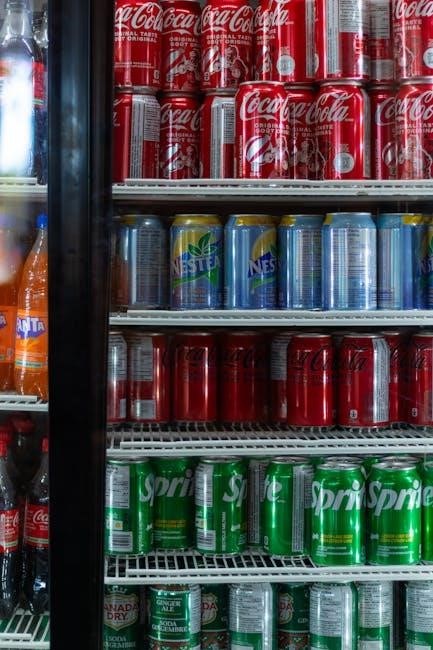
Amana refrigerators maximize storage space with thoughtfully designed door bins and compartments. These bins are ideal for storing frequently accessed items like condiments‚ beverages‚ and dairy products‚ keeping them within easy reach.
Door bins come in various sizes and configurations to accommodate different container shapes and sizes. Adjustable bins allow for customization‚ adapting to your specific storage needs. Heavier items should be placed on lower shelves to maintain stability and prevent accidental spills.
Utilize the door storage effectively to free up valuable shelf space inside the refrigerator‚ optimizing organization and accessibility. Regularly check expiration dates of stored items to maintain freshness.
Ice Maker Operation
Your Amana refrigerator’s ice maker provides a convenient supply of ice on demand. To begin‚ ensure the ice maker is activated – typically via a switch located inside the freezer compartment. Allow up to 24 hours for initial ice production as the system cools and begins freezing.
The ice maker automatically stops production when the storage bin is full. Regularly empty the bin to maximize capacity. If ice production is slow or stops altogether‚ check for obstructions in the water line or ice ejection path.
Deactivating the ice maker is recommended during extended absences to conserve water and prevent ice buildup. Refer to the control panel for activation/deactivation options.
6.1 Ice Maker Activation & Deactivation
Ice Maker Activation & Deactivation

Activating your Amana refrigerator’s ice maker is simple. Locate the on/off switch‚ usually found within the freezer compartment‚ often near the ice maker itself. Ensure the water supply is connected and fully pressurized for optimal operation. A brief period is needed for initial ice production.
To deactivate‚ flip the switch to the “off” position. This is useful during vacations or when a full ice bin isn’t needed‚ conserving water and preventing potential issues. Some models feature electronic controls for activation/deactivation via the control panel.
Always remember to empty the ice bin periodically to prevent ice from melting and refreezing‚ which can cause clumping.
6.2 Ice Production & Storage
Ice Production & Storage
Your Amana refrigerator’s ice maker begins producing ice shortly after activation‚ contingent upon a stable water supply and appropriate freezer temperature – ideally below 10°F (-12°C). Initial cycles may discard the first few batches to ensure purity.
Ice is automatically stored in the freezer’s ice bin. The bin’s capacity varies by model‚ so consult your refrigerator’s specifications for details. Avoid overfilling the bin‚ as this can hinder ice ejection. Regularly check the bin for any ice clumps or obstructions.
For optimal ice quality‚ consume it within a reasonable timeframe. Prolonged storage can lead to freezer burn or altered taste.
6.3 Troubleshooting Ice Maker Issues
Troubleshooting Ice Maker Issues
If your Amana ice maker isn’t producing ice‚ first verify the ice maker is activated. Check the water supply line for kinks or freezing. Ensure the freezer temperature is sufficiently cold – below 10°F (-12°C) is recommended.
If ice production is slow‚ the water filter may be clogged‚ requiring replacement. Inspect the ice bin for obstructions preventing ejection. Listen for unusual noises‚ which could indicate a mechanical problem.
Should issues persist‚ consult the full troubleshooting section of this manual or contact Amana customer support. Do not attempt repairs yourself‚ as this could void your warranty and potentially cause damage.
Water Dispenser Operation (If Applicable)

Your Amana refrigerator‚ if equipped with a water dispenser‚ provides convenient access to chilled‚ filtered water. Before initial use‚ dispense water for several minutes to flush the system and remove any air or impurities from the water line.
To dispense water‚ firmly press your glass against the dispenser paddle. Adjust pressure for desired fill level. Regularly replace the water filter – typically every six months – to maintain water quality and optimal dispenser performance.
If water flow is reduced‚ check the water filter and supply line. Ensure the water supply valve is fully open. For any unusual tastes or odors‚ replace the filter immediately.
7.1 Water Filter Replacement
Maintaining optimal water quality requires regular filter replacement‚ generally every six months‚ or more frequently depending on water usage and quality. Begin by locating the water filter‚ usually within the refrigerator compartment or base grille.
Turn off the refrigerator’s ice maker to prevent ice buildup during the process. Gently twist or push the existing filter to release it‚ following the specific instructions for your model. Align the new filter with the housing and firmly push it into place until it locks.
After installation‚ flush the system by dispensing water for several minutes to remove any air or carbon particles. Reset the filter indicator‚ if applicable‚ according to the control panel instructions.
7.2 Dispensing Water
To dispense water‚ firmly press your glass against the water dispenser paddle located on the refrigerator door. Maintain consistent pressure for a steady flow; releasing pressure will stop the water. Ensure your glass is adequately sized to prevent spills.
If your model features a lock function‚ verify it’s disengaged before attempting to dispense water. Some models offer chilled water options‚ selectable via the control panel. Regularly check for leaks around the dispenser and water line connections.
For optimal taste‚ flush the system after filter replacement‚ dispensing several glasses of water to remove any residual air or carbon particles. Always use a clean glass to maintain water purity.
Cleaning and Maintenance
Regular cleaning ensures optimal performance and longevity of your Amana refrigerator. Interior cleaning involves removing shelves and bins‚ washing them with warm‚ soapy water‚ and drying thoroughly before replacement. Wipe down interior surfaces with a baking soda solution to neutralize odors.
For exterior cleaning‚ use a mild detergent and warm water to wipe down the door and sides. Avoid abrasive cleaners that can damage the finish. The condenser coils‚ typically located at the back or bottom‚ require periodic cleaning with a vacuum cleaner brush attachment to remove dust and debris.

This improves cooling efficiency. Always disconnect power before cleaning the condenser coils. Consistent maintenance prevents build-up and ensures efficient operation.
8.1 Interior Cleaning
Maintaining a clean refrigerator interior is crucial for food safety and hygiene. Begin by disconnecting the refrigerator from the power source. Remove all food items‚ discarding any spoiled products. Take out all removable parts – shelves‚ drawers‚ and bins – and wash them individually with warm water and mild dish soap.
Rinse thoroughly and allow to air dry or wipe with a clean cloth. For the interior walls and surfaces‚ prepare a solution of baking soda and water. This effectively neutralizes odors and gently cleans. Wipe down all interior surfaces with this solution‚ then rinse with clean water and dry.
Pay attention to spills and stains‚ addressing them promptly to prevent permanent marks.
8.2 Exterior Cleaning
Regular exterior cleaning keeps your Amana refrigerator looking its best and prevents buildup. Begin by wiping down the door surfaces with a soft cloth dampened with warm water and mild dish soap. Avoid abrasive cleaners‚ as they can damage the finish.
For stainless steel models‚ use a stainless steel cleaner specifically designed for appliances‚ following the manufacturer’s instructions. Wipe in the direction of the grain to avoid streaks. Pay attention to the door handles‚ as they accumulate fingerprints and grime.
Rinse with a clean‚ damp cloth and dry thoroughly. Clean the top and sides of the refrigerator as well‚ ensuring no dust or debris accumulates.
8.3 Condenser Coil Cleaning
Maintaining clean condenser coils is crucial for efficient refrigerator operation. Located on the back or bottom of the unit‚ these coils dissipate heat. Dust and debris accumulation forces the refrigerator to work harder‚ increasing energy consumption.
Before cleaning‚ disconnect the refrigerator from power! Use a vacuum cleaner with a brush attachment to gently remove dust from the coils. A long‚ narrow brush can help reach tight spaces. Avoid bending the coils‚ as this can damage them.
Cleaning the condenser coils every six months is recommended. Regular cleaning improves cooling performance and extends the life of your Amana refrigerator‚ saving energy and money.
Troubleshooting Common Issues
If your Amana refrigerator isn’t cooling‚ first check the temperature controls and ensure the door seals are intact. A faulty door seal allows warm air to enter‚ impacting cooling. For ice maker problems‚ verify it’s activated and the water supply is connected.
Unusual noises could indicate a leveling issue; adjust the feet to stabilize the unit. If water dispensing isn’t working‚ check the water filter and supply line for blockages. Always consult the full instruction manual before attempting repairs.
If issues persist‚ record the model and serial number before contacting Amana customer support for assistance. Proper documentation speeds up the troubleshooting process.
Safety Precautions
Important Safety Instructions: Always disconnect the refrigerator from the power supply before cleaning or performing maintenance. Never use flammable cleaning agents‚ as they pose a fire hazard. Avoid storing explosive substances inside the appliance.
Do not attempt to repair the refrigerator yourself unless you are a qualified technician. Improper repairs can lead to electrical shock or damage to the unit. Ensure the power cord is not damaged and avoid using extension cords.
Keep the ventilation openings clear of obstructions to prevent overheating. Supervise children around the refrigerator and instruct them about safe operation. If the appliance is damaged‚ contact Amana service immediately.